
Find Property Records in Scott County
Scott County property records are kept by the County Recorder and Property and Taxpayer Services offices in Shakopee. You can search recorded documents, look up assessed values, and find tax data through online tools or by visiting the courthouse in person. The county covers a fast-growing part of the southwest Twin Cities metro, including Shakopee, Prior Lake, Savage, and Jordan. Whether you need a copy of a deed, want to check a mortgage history, or just need current valuation data, Scott County has both online and in-person options to help you find what you are looking for.
Scott County Overview
Scott County Recorder
The Scott County Recorder is the official custodian of real estate documents in the county. The office records deeds, mortgages, satisfactions, liens, plats, easements, and other instruments tied to real property. Every document filed receives a unique document number and is indexed by party names and legal description. Under Minnesota Statutes Chapter 507, recording a document provides public notice that a property transfer or encumbrance has taken place. That notice protects buyers, lenders, and anyone else with an interest in the property.
The office is located at 200 4th Avenue W in Shakopee. Staff accept documents for recording until 4:15 PM on business days. E-recording is available, which allows title companies and lenders to submit documents electronically without making a trip to the office. Torrens property registrations are also handled here. Under Chapter 508, Torrens titles require a court process and the Recorder issues a Certificate of Title. Once land is registered under Torrens, all future transfers and liens must come through the Recorder using the appropriate Torrens forms. Both abstract and Torrens systems run in parallel in Scott County, and the Recorder manages both.
UCC filings for personal property security interests tied to real estate fixtures are also accepted here. Certified copies of any recorded instrument are available on request.
| Office | Scott County Recorder |
|---|---|
| Address | 200 4th Avenue W, Shakopee, MN 55379 |
| Phone | 952-496-8150 |
| recorder@co.scott.mn.us | |
| Hours | Monday through Friday, 8:00 AM to 4:30 PM (documents accepted until 4:15 PM) |
| Website | scottcountymn.gov - Recorder |
Scott County Property and Taxpayer Services
Scott County's Property and Taxpayer Services office handles both assessment and tax collection functions for the county. The office is located at the same address as the Recorder, at 200 4th Avenue W in Shakopee. Staff manage roughly 55,000 parcels, a number that has grown steadily as the county continues to attract new residential and commercial development. Property values are set as of January 2 each year under Minnesota Statutes Chapter 273, and valuation notices go out to property owners in March.
Physical inspections of each parcel follow a five-year cycle. Between visits, the office uses market sales data and analysis to keep values in line with what properties are actually selling for. Property owners who disagree with an assessed value can appeal first to the local Board of Appeal and Equalization, which meets each April, and then to the County Board if needed. The homestead program is also handled by this office. If your main residence is in Scott County, you may qualify for a reduced tax classification under the homestead rules.
Note: Valuation notices are mailed each March. Property owners should review them promptly, since appeal deadlines apply.
| Office | Scott County Property and Taxpayer Services |
|---|---|
| Address | 200 4th Avenue W, Shakopee, MN 55379 |
| Phone | 952-496-8910 |
| assessor@co.scott.mn.us | |
| Hours | Monday through Friday, 8:00 AM to 4:30 PM |
| Website | scottcountymn.gov - Property Taxpayer Services |
Search Scott County Property Records Online
Scott County gives you several online ways to look up property records without visiting the courthouse. The Beacon property search system covers all Scott County parcels. You can search by parcel identification number, owner name, or property address. Results show current and past assessed values, sales history with prices and dates, building characteristics like square footage and year built, zoning data, and aerial imagery. The system is mobile-friendly and runs around the clock. Access it at beacon.schneidercorp.com - Scott County.
For recorded documents, Scott County uses iDoc, an online document search system. It covers instruments recorded from approximately 1990 to the present. You can search by party name, document type, or date range, and document images are available online. The system offers both subscription and pay-per-document pricing. For older records that predate the online system, you need to visit the Recorder's office in Shakopee directly. Access iDoc at idoc.marketspan.com/scott. E-recording is available for filers who submit documents frequently. The Minnesota Department of Revenue also maintains a statewide property tax portal that can help you understand how local taxes relate to state law.
GIS mapping tools are also available for viewing parcel boundaries, lot dimensions, and other geographic data tied to specific properties.
Scott County Property Records and Documents
Scott County property records cover a wide range of document types. Warranty deeds and quit claim deeds are the most common, used to transfer ownership from seller to buyer. Mortgages and satisfaction of mortgage documents show what loans exist on a property and which have been paid off. Plats create the legal subdivision of land and must be recorded before any lots can be sold. Other common instruments include easement agreements, declarations of covenants, and development contracts. All of these are recorded under Minnesota Statutes Chapter 272, which sets the foundation for property records and taxation in the state.
Abstract property in Scott County follows a chain-of-title system. Each deed and encumbrance is recorded in sequence, and a title search traces ownership back through all prior owners. Torrens property, by contrast, is governed by a Certificate of Title that serves as the definitive record. Both systems run in parallel within the county, and the Recorder manages each. When a property sale closes, the title company searches both the abstract and Torrens systems to confirm clean title before funds change hands.
Well disclosure certificates are recorded here too. Minnesota law requires sellers to disclose the location and status of wells on any property being sold. These documents are tied to the deed and follow the property permanently. Plats cost $56 to record rather than the standard $46, reflecting their larger size.
The Minnesota statutes governing real property recording at Chapter 507 are worth reviewing if you have questions about how recording works and what protections it provides.
Recording Fees and Transfer Taxes
Scott County follows the state fee schedule for recording documents. The base fee is $46 for the first page of any instrument. Each page after that costs $4. A six-page mortgage would cost $66 to record. Plats run $56. Certified copies of recorded documents cost $10 plus per-page fees. If a document covers multiple titles, each additional title adds $46 to the total fee.
Two state taxes apply when real estate changes hands. The State Deed Tax under Minnesota Statutes Chapter 287 is 0.33% of the net consideration, with a minimum of $1.65. On a $350,000 home sale, that comes to $1,155. The Mortgage Registry Tax is 0.23% of the principal amount of the new mortgage. On a $280,000 loan, the tax is $644. Both taxes must be paid when the deed or mortgage is brought in for recording. You cannot record a taxable deed or mortgage without paying these taxes at the time of submission.
Note: Fee schedules can be updated when state law changes, so confirm current amounts with the Recorder's office before submitting documents.
Property Taxes in Scott County
Property taxes in Scott County are billed each year based on the assessed value and classification set by the Property and Taxpayer Services office. Tax statements go out in March. The first half of the bill is due May 15. The second half comes due October 15. Payment can be made online through the county website, by mail, in person at the offices in Shakopee, or through an escrow account if your mortgage lender handles taxes on your behalf.
Under Minnesota Statutes Chapter 279, taxes become delinquent on January 1 of the year after they were due. Delinquent taxes carry interest and penalties. If taxes stay unpaid for three years, the county can start a tax forfeiture process. At that point, the owner can lose all rights to the property. The county then takes control of the parcel and may sell it as tax-forfeited land. Property owners who fall behind should reach out to the county tax office right away to look at their options before the situation gets to forfeiture.
Scott County is one of the faster-growing counties in Minnesota. That growth puts upward pressure on assessed values in many neighborhoods. Truth in Taxation notices go out each fall to show proposed taxes for the next year. Property owners can attend public hearings to speak on any proposed increases before budgets are finalized.
State programs may help some owners. The Minnesota Department of Revenue runs a property tax refund program for homeowners and renters with high tax burdens relative to their income. You can get more information on those programs at revenue.state.mn.us.
The Minnesota Statutes Chapter 273 portal covers the full framework for property valuation and classification across all Minnesota counties, including Scott.
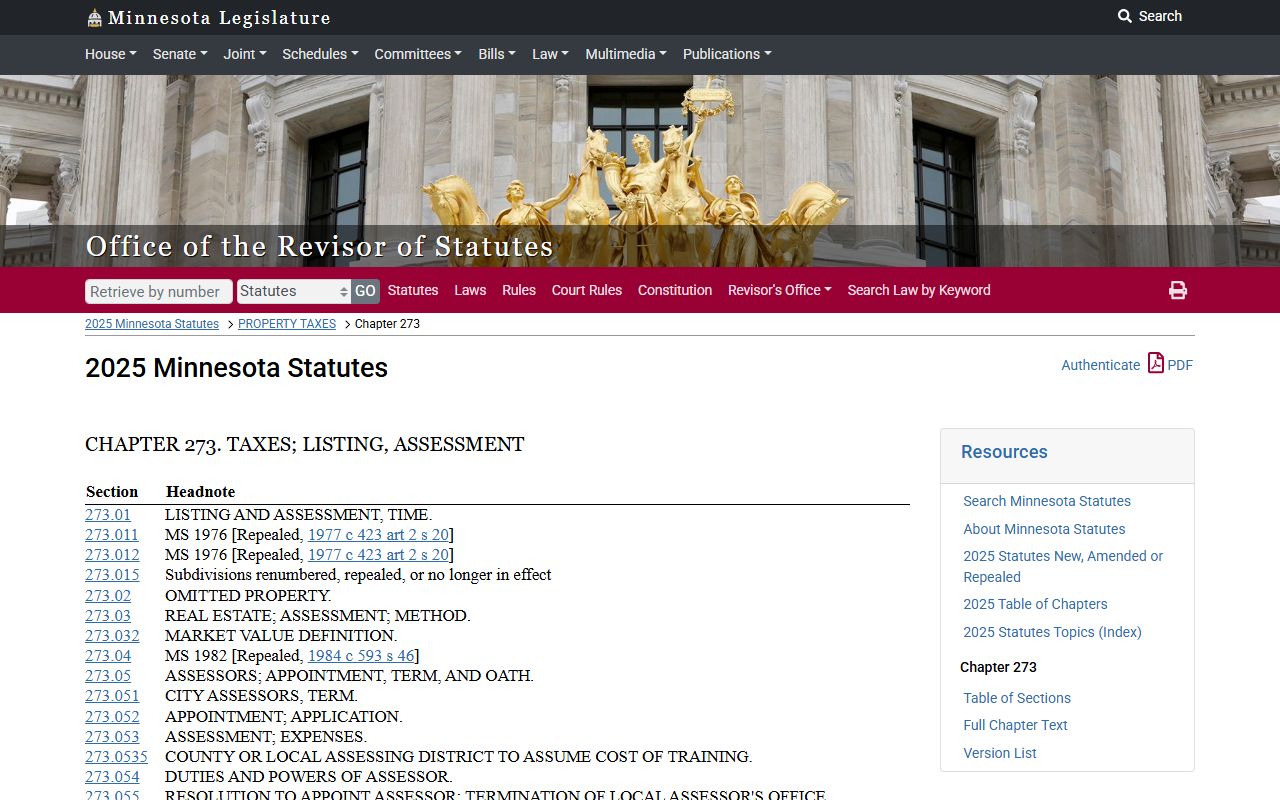
Understanding how the state sets the rules for local assessments can help Scott County property owners make sense of their valuation notices and know when to appeal.
Cities in Scott County
Scott County covers a large part of the southwest metro. All property records for communities in the county are on file with the Scott County Recorder in Shakopee.
Communities in Scott County include Shakopee, Prior Lake, Savage, Jordan, Belle Plaine, New Prague, and several townships. None of these cities currently meets the population threshold for a dedicated city page, but all property filings go through the Scott County Recorder's office at 200 4th Avenue W in Shakopee.
Nearby Counties
These counties border Scott County. If you are not sure which county holds the property records you need, check the property address and legal description.